

For three blazing days in June, Barcelona pulsed with the beat of Sónar Festival 2025. The legendary meeting point between electronic music, avant-garde art, and emerging technology returned for its 32nd edition with more force than ever, spreading across two iconic venues and offering a sonic experience that was both cerebral and physical.
By day, the action unfolded at Fira Montjuïc, where Sónar by Day and Sónar+D drew in thousands with workshops, audiovisual installations, and live sets under the Catalan sun. The ambiance was relaxed but forward-thinking, with curious minds drifting between shaded courtyards, pop-up art spaces, and open-air stages. It was a festival within a festival, where discussions on AI, genetics, and post-human creativity blurred with live coding sets and immersive performances.
By night, the scene shifted dramatically to Fira Gran Via. There, vast hangars became cathedrals of sound, each hall meticulously tuned for maximum sensory impact. It was here that Sónar by Night came into its own. From 8:30 in the evening until sunrise, the space transformed into a labyrinth of lights, basslines, and human movement.
This year’s lineup was a masterclass in diversity and innovation. Peggy Gou played a high-energy house set that pulled no punches. Richie Hawtin returned in his Plastikman guise, enveloping the audience in a hypnotic journey of minimal techno and spectral visuals. Overmono, the UK duo riding a wave of underground acclaim, delivered one of the most vital and textured live sets of the weekend. Four Tet, always a Sónar favorite, built a deeply emotional yet rhythmically complex journey, while Honey Dijon brought Chicago-rooted house euphoria with precision and soul.
One of the most talked-about moments came during the surprise back-to-back set between Armin van Buuren and Indira Paganotto, where trance met hard techno in a clash that defied purist expectations and shook the Gran Via halls. Skrillex teamed up with Blawan for an experimental take on bass-heavy chaos, pushing their respective sounds into uncharted territory.
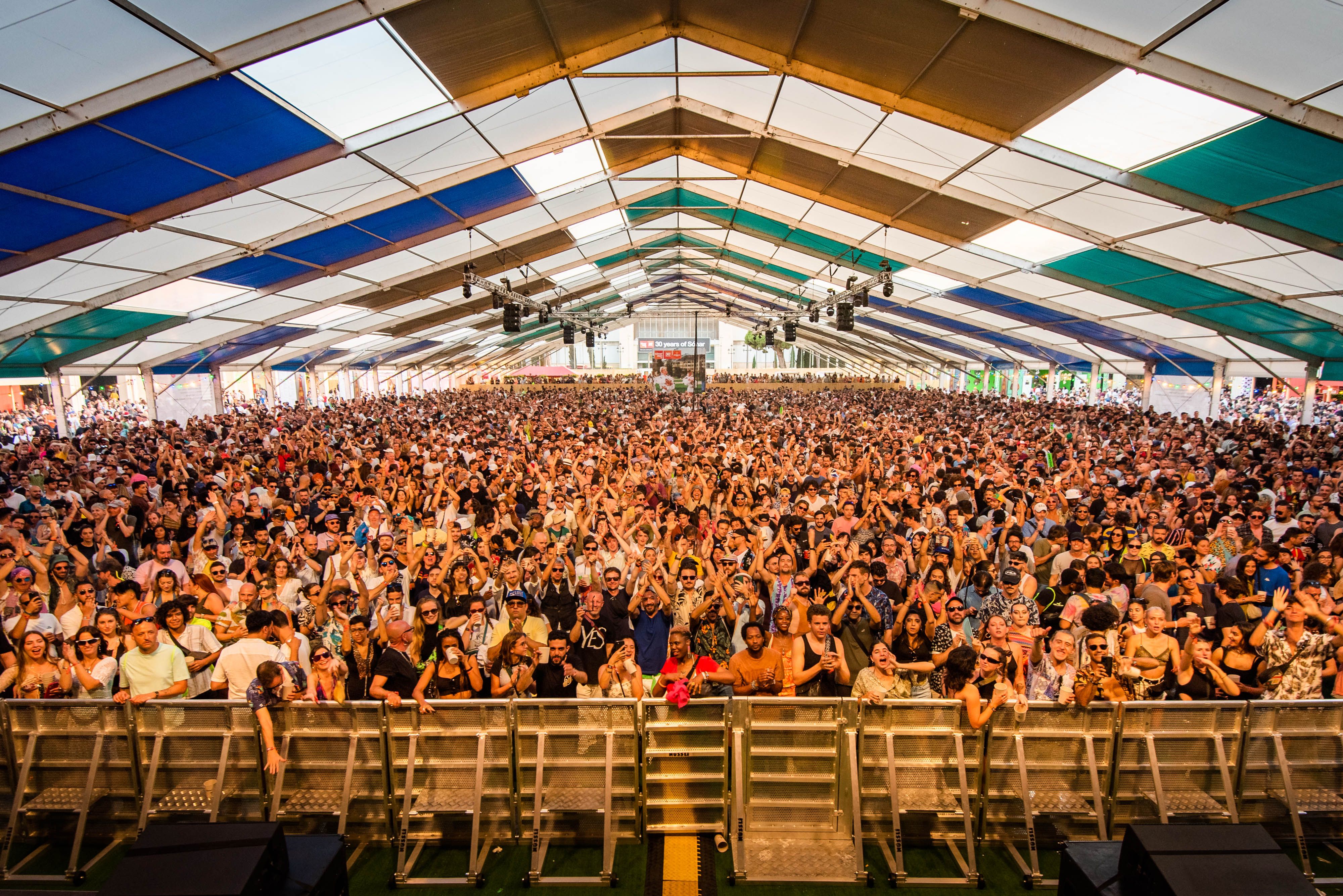
New names also made their mark. Mushka’s mix of perreo, pop and subversive lyrics drew in a wide local crowd. Pa Salieu injected UK grime with an Afro-futurist twist. Sega Bodega carved out a cinematic, genre-blending set that felt as much like a score to a film as it did a club performance.
Sónar+D remained the intellectual engine of the festival. Beyond panels and installations, there were boundary-pushing collaborations like the AI performance that responded to the crowd’s movements in real time. Visual artists and performers explored the fusion of biology, code, and ritual, challenging traditional performance formats. The installations were not just aesthetic but conceptual, asking questions about where art ends and systems begin.
Getting around the city was seamless thanks to a mix of metro lines, festival shuttles, and clear infrastructure planning. The crowd — local ravers, international art students, music journalists, and techno pilgrims — moved effortlessly from day to night, from the experimental to the ecstatic.
But above all, Sónar 2025 was a reminder that electronic music isn’t just about dancing. It’s about exploring the possibilities of rhythm, light, technology, and community. It’s about listening with the body as much as the mind. From the moment the first bassline rolled across Montjuïc to the final kickdrum at Gran Via, the festival created a shared space where innovation met celebration.
As the last echoes faded into the Mediterranean morning, one thing was clear: Sónar is still one of the most essential and future-facing festivals in the world. It doesn’t chase trends, it creates them.
 LIVEGROOVES
Leave a comment