Tag: madrid

  • Inside Bad Gyal’s Más Cara Arrival in Madrid

    Inside Bad Gyal’s Más Cara Arrival in Madrid

    By the time Bad Gyal reaches Madrid this April, the conversation will no longer be about whether she can headline an arena. That part is settled. The real question is what happens when an artist who has built her career on control, attitude and sonic precision steps into a room as big as Movistar Arena with a brand new album already defining the mood of her next chapter. In Madrid, she is scheduled to play three nights at Movistar Arena on April 11, 12 and 14, 2026, with doors at 7:00 PM and the show starting at 9:00 PM.
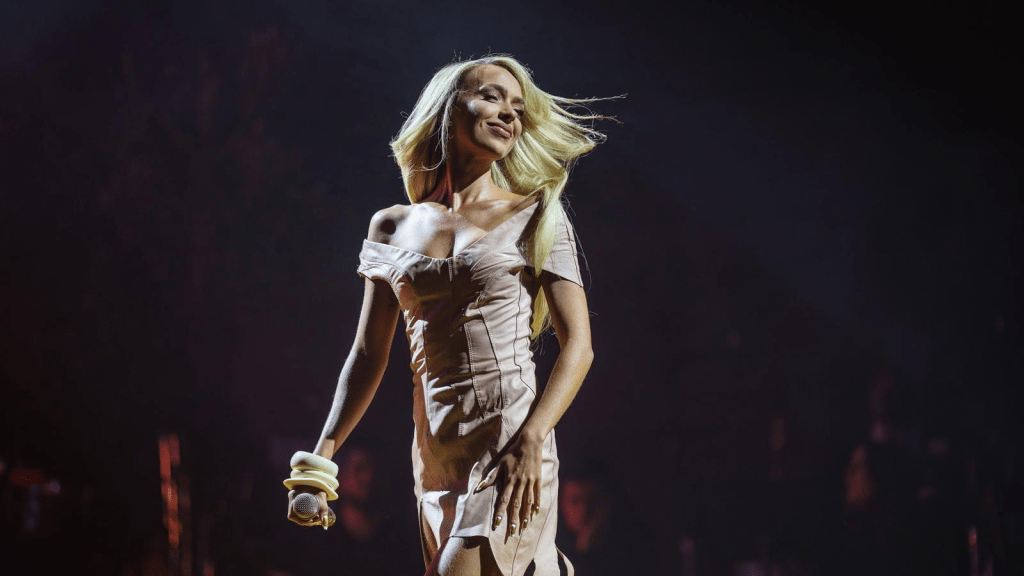
    That matters because these dates are not being sold as just another round of festival-adjacent appearances. They are framed as part of the Tour 2026, the live presentation of Más Cara, Bad Gyal’s second studio album, which was released on March 6, 2026. On her official site, the record sits front and center in the current campaign around this era, alongside singles such as “Fuma,” “Última Noche,” and “Da Me.” Spotify lists the album at 19 tracks with a runtime of 56 minutes and 36 seconds, which already tells you something about its ambition: this is not a short, efficient streaming-era drop, but a full-length statement.

    What makes Más Cara especially interesting is that it does not sound like an artist trying to simplify herself for scale. If anything, it does the opposite. Reporting around the album’s release describes it as a record built from dancehall, reggaetón, guaracha and kompa, with strong Caribbean roots and a warmer, more handcrafted feeling than a lot of contemporary urban-pop releases. Bad Gyal described it as a gift to her younger self, which helps explain why the album feels less like a sharp rebrand and more like a consolidation of everything she has been building toward for years.
    That is what should make the Madrid shows compelling. They are not arriving in the messy aftermath of an unfinished rollout. They arrive when the album is already out, already being discussed, and already shaping the architecture of the set. Expect these concerts to move between the glossy, high-impact confidence of the new material and the songs that made Bad Gyal such a singular figure in Spanish urban music in the first place. Madrid is not just getting the catalogue. It is getting the album-era version of Bad Gyal, the one who now seems less interested in proving range than in deepening atmosphere.

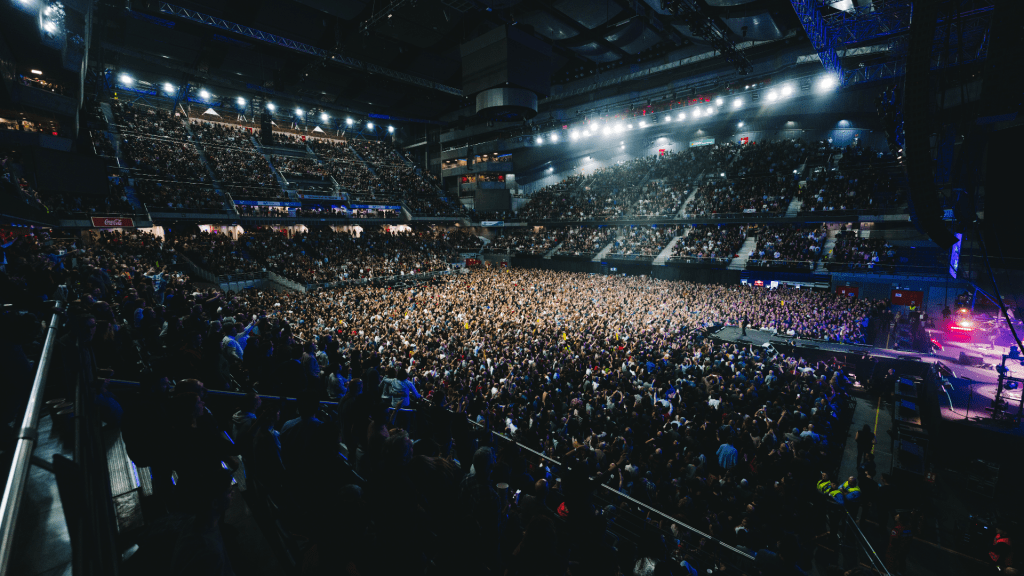
    Movistar Arena is also the right kind of venue for that transformation. Bad Gyal’s music needs scale, but it also needs friction. It needs bass pressure, a crowd that reacts physically, and the sense that glamour can still feel dangerous when the lights go down. In a room like this, tracks from Más Cara are likely to hit differently: less like songs arriving one by one, more like a sequence of moods built around heat, control and tension. The live show in Barcelona that opened this cycle was already described in the press as a spectacle built around her magnetism and the logic of a fully formed persona rather than simple crowd-pleasing. Madrid will expect that same level of command.

    As for ticket types, the official sales pages for the April 11 and 12 shows list several categories: Pista General (€55), Planta 2 Baja (€49.50), Planta 2 Alta (€49.50), Front Stage (€88), Grada Extensible (€55), Planta 0 (€55), Planta 4 (€44) and Planta 6 (€44).

    So there is a very specific energy around these Madrid dates now. Not uncertainty. Not curiosity. More like anticipation sharpened by timing. Más Cara has given Bad Gyal a larger canvas without making her any less precise, and that is usually when artists become most dangerous live. Madrid is getting her at exactly the right moment: with a fresh album, a bigger production frame, and just enough demand around the remaining tickets to make the whole run feel like an event rather than a routine stop. If the new record is about owning your sound without apology, then these shows look set to be its clearest physical form yet.
  • Madrid Salvaje 2025: the Future of Spanish Urban Music

    Madrid Salvaje 2025: the Future of Spanish Urban Music

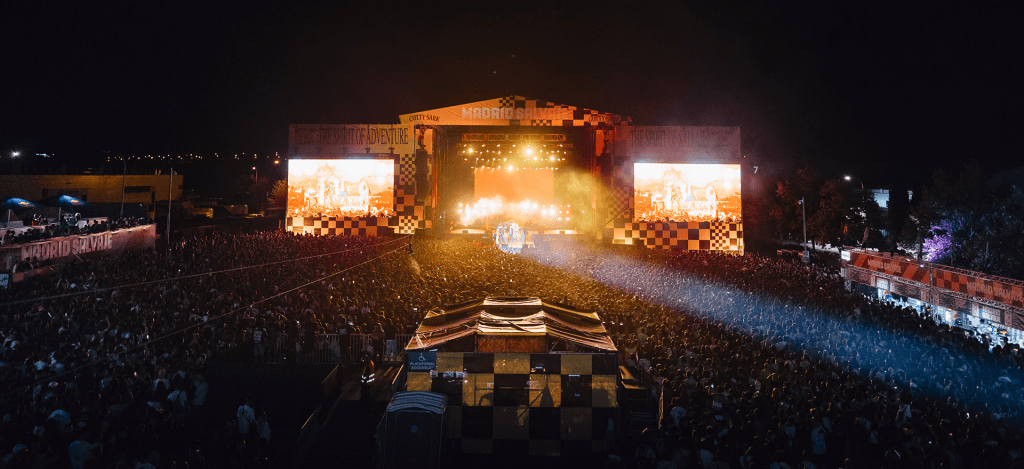
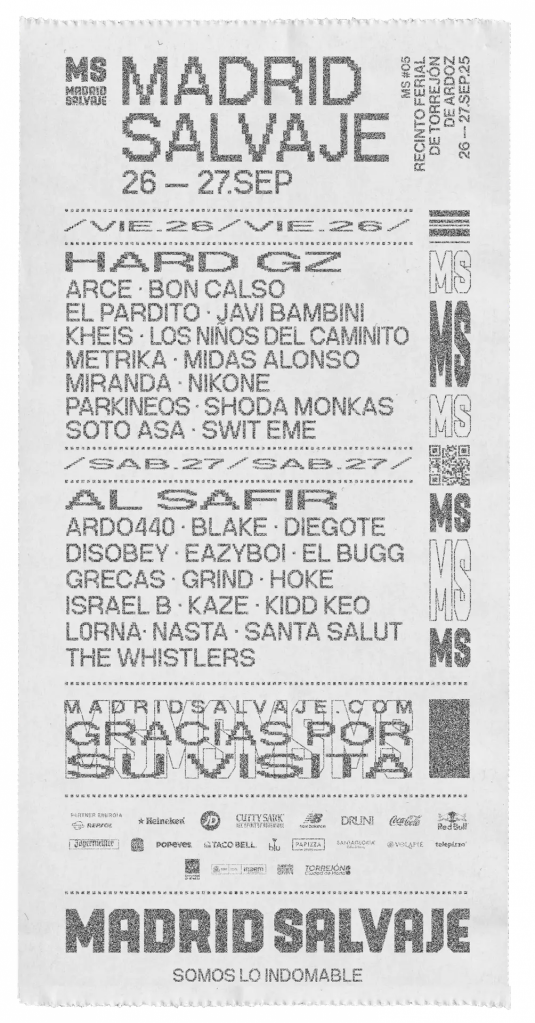
    The heart of Madrid Salvaje has always been its lineup, and 2025 feels like the festival’s most complete statement yet. At the top sits Al Safir, whose meteoric rise from Madrid’s barrios to the national stage embodies the festival’s ethos of giving a voice to the new wave of Spanish rap. Alongside him, figures like Sticky M.A. and Hard GZ bring a raw intensity, each with their own street-honed cadence—Sticky’s futuristic trap stylings balancing Hard GZ’s politically charged rhymes. The underground duo Grecas and the ever-inventive Midas Alonso keep the energy experimental, carving out spaces where genre rules bend and break.

    But the festival doesn’t stop there. It leans into the hybrid energy of artists like Kidd Keo, who continues to blur the lines between Spanish trap and U.S. influences, and Soto Asa, whose hypnotic reggaetón and trance-tinged flows feel tailor-made for open-air nights by the lake. Blake and Parkineos bring the swagger of street rap, while emerging voices such as Diegote and El Bugg represent the new generation bubbling up with fresh urgency.

    Diversity is key, and Madrid Salvaje prides itself on showcasing voices that challenge the mainstream. Santa Salut arrives as one of the few women at the top of Spain’s hip-hop scene, her razor-sharp lyricism carving out feminist and social narratives rarely heard in festival headliners. Acts like Nasta and 3lpardito keep things firmly rooted in hardcore rap traditions, while Kaze and Disobey add layers of emotional grit, bridging the personal with the political. On the fringes, collectives such as The Whistlers and rising names like SWIT EME or Javi Bambini Cattivi promise those chaotic, unpredictable moments that only happen in the margins of a wild festival night.

    Together, this roster paints a vivid picture of the Spanish urban sound in 2025: unapologetically diverse, politically alive, and sonically restless. It’s not just a lineup, but a map of where rap, trap, and reggaetón are heading—raw, unfiltered, and ready to explode in the open-air playground of Torrejón de Ardoz.

    For those ready to dive into this wild journey, tickets are still available through the official website

  • Mondo open air – ØTTA , Patrick Mason, Serafina

    Mondo open air – ØTTA , Patrick Mason, Serafina

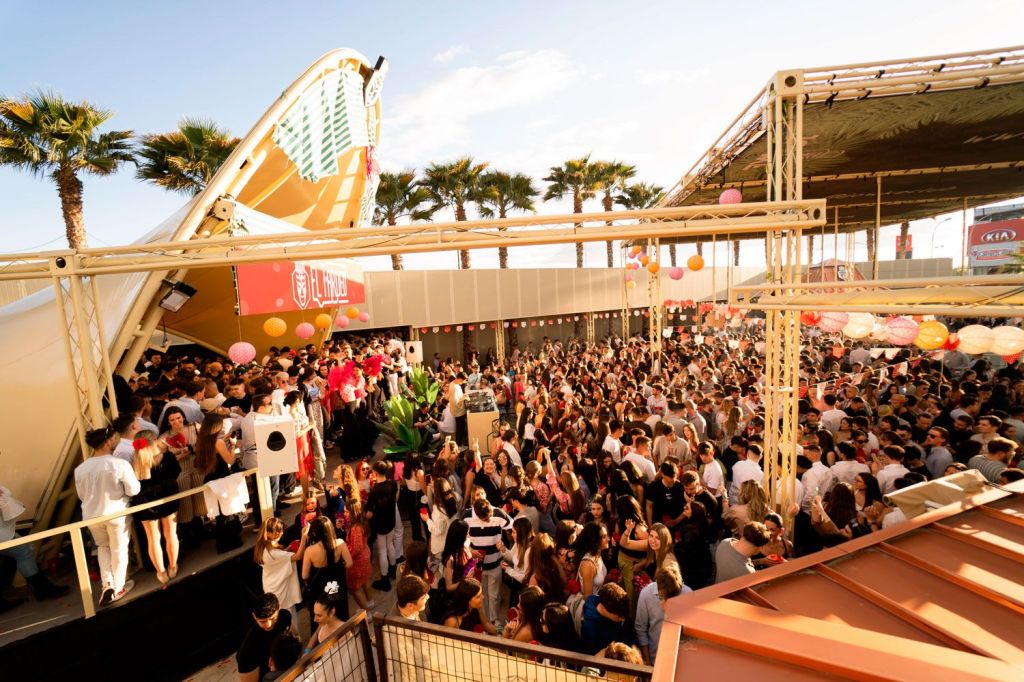
    Bathed in golden sunlight and pulsing with bass, the third edition of Mondo Open Air unfolded this past Sunday at Jowke, the lush terrace-club hybrid on the outskirts of Madrid where palm trees frame the dancefloor and afternoon melts into something euphoric. From early afternoon until nightfall, Jowke became more than a venue; it became a portal.

    Jowke has that rare mix of urban edge and tropical dream. With its open-air decks, water features, elevated platforms and ambient lighting, the space moves between industrial and intimate. There’s room to drift, to lose yourself, to dance under the soft shade or perch on a ledge and watch the crowd fall into rhythm. The sound system was crisp and full-bodied, delivering every kick with warmth and force.

    Entasia opened the day with a set rooted in hypnotic techno. Hailing from the UK, her style blends gritty percussion with trance-like atmospheres. She built her session with intention, layering tension and suspense until the floor began to move as one. The energy was slow-burning and cinematic, the kind of set that invites you to surrender without even realizing it.

    ØTTA followed and brought a different light. Also from the UK, she leaned into melodic techno and soulful house textures. Her selections carried warmth and color, weaving emotional resonance into the growing pulse of the evening. As the sun began to drop behind the trees, her music seemed to guide it, each transition flowing like a gentle breath. People began to loosen, to lean into the groove with closed eyes and open smiles.

    Then came Patrick Mason. The Berlin-based artist arrived with a magnetic presence and a razor-sharp sound. His set was a masterclass in intensity, blending industrial techno with acid flashes, metallic rhythms and dramatic breakdowns. Patrick doesn’t just DJ; he commands. Every gesture felt choreographed, every track perfectly placed. The terrace turned into a pressure cooker, and when the drops landed, the collective release was immediate and wild. He connected with the crowd not just through sound, but through performance, and it made all the difference.

    Earlier and later in the day, Serafina and Gerardo Niva each brought their signature touch. Serafina carved out a psychedelic, trance-laced path through the mid-afternoon haze, while Gerardo, a beloved figure in the Mondo scene, closed with a deep and driving techno set that felt both grounded and expansive.

    What lingered most was the feeling in the air. This wasn’t just a party; it was a community in motion. Barefoot dancers by the pool, groups sprawled across lounge beds, hands reaching toward the fading light during Mason’s climactic peaks. There was connection, freedom, and something close to joy.

    Mondo Open Air at Jowke has cemented itself as one of Madrid’s essential open-air experiences. It’s more than a lineup, more than a location. It’s the way the music, the architecture and the sunlight converge into something unforgettable. If you’re thinking of catching the next one, don’t hesitate. Tickets are available at http://www.mondodisko.es/entradas. Come for the music, stay for the moment.